
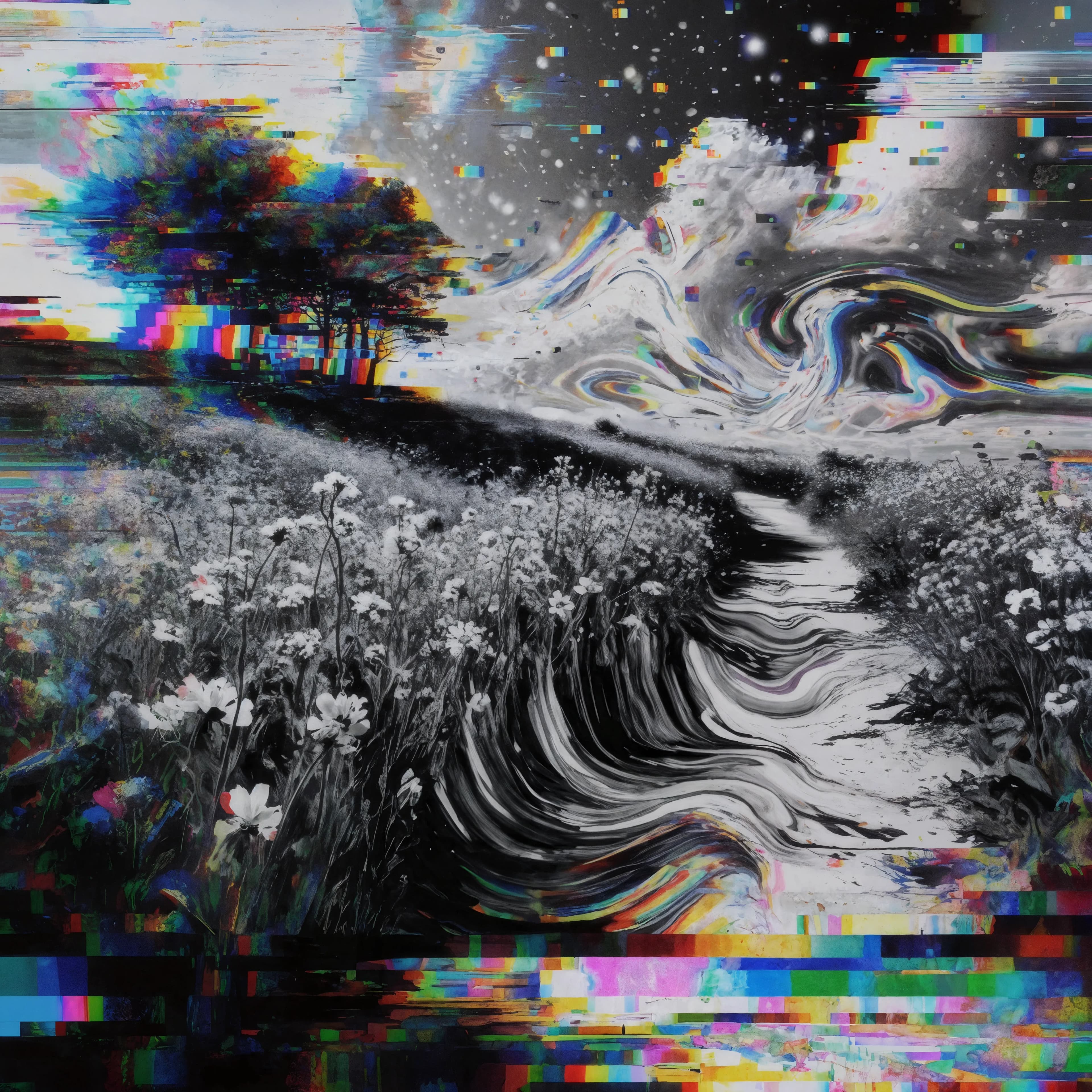
Open researchSpatial Intelligence
Computer vision still has no foundation model — no geometry foundation model, no visual general intelligence. We are building both, in the open.
Iris-3B
Pixel-space generation & general vision learner
A fully open 3B flow-matching transformer that generates raw RGB pixels directly — no VAE in the loop — and a generative prior that acts as a general vision learner.
Read the researchLanguage has LLMs.Vision has no GFM, no VGI.Understanding is generation.
Computer vision — how a machine understands the real world, its space and its 3D structure — and 3D generation are treated as two fields. They are one problem. Understanding a world and generating a world depend on the same missing layer: a coherent internal representation of space. A model that cannot hold space cannot reliably understand it, and cannot reliably generate it either. Language already went through this: the model that predicts text turned out to be the model that understands it.
Vision has no such foundation yet — no Geometry Foundation Model (GFM) that grounds perception in 3D, and no Visual General Intelligence (VGI) that reasons and generates over it. 3D understanding and 3D generation are not solved.